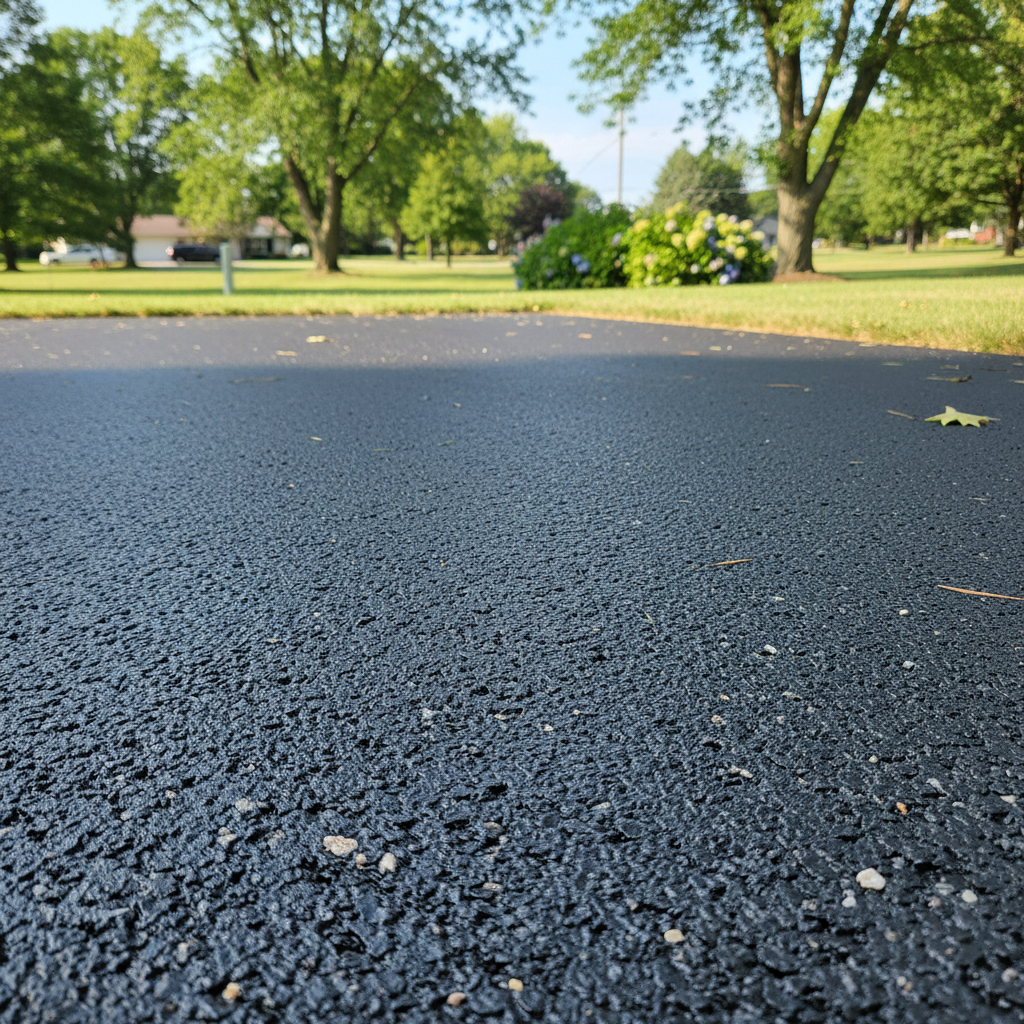
Alright, let's talk commercial asphalt. I know what you're thinking – 'commercial' usually means big businesses, right? But here in Kalamazoo, I get a lot of homeowners asking me about commercial-grade asphalt for their own properties. Maybe it's a long, shared driveway, a private road, or a large parking area for a home-based business. Whatever the reason, you've got questions, and I've got answers. I've been doing this for a while, seen it all, especially with our Michigan winters and those tricky spring thaws.
Can I use 'commercial' asphalt for my residential driveway? What's the difference?
Yeah, you absolutely can, and sometimes it's a smart move. The main difference between what we call 'commercial' and 'residential' asphalt isn't some secret recipe, not really. It's usually about the thickness of the layers and how well we compact them. Commercial jobs typically have a thicker base layer, often crushed aggregate, and a thicker asphalt top coat – sometimes 3-4 inches or more. Compare that to a residential driveway that might be 2-3 inches. It's built to handle heavier loads, more frequent traffic, and just generally take a bigger beating. If you've got a long driveway, heavy vehicles (like an RV or a truck you use for work), or you just want something that's going to last a really long time with minimal fuss, commercial specs can be a good investment for a residential property. It's all about durability, plain and simple.
How much more expensive is commercial asphalt compared to standard residential paving?
That's the million-dollar question, isn't it? It's tough to give you a hard number without seeing the job, but generally, yes, it's going to cost more upfront. You're paying for more material – more stone for the base, more asphalt mix for the surface. You're also paying for the extra labor and equipment time it takes to lay those thicker layers and compact them properly. Think of it like this: a bigger, stronger foundation costs more. However, here's the kicker – that upfront cost often pays off in the long run. You'll likely need less maintenance and fewer repairs down the line, and it'll last longer before needing a full replacement. So, while the initial sticker shock might be higher, your cost over the lifespan of the pavement could actually be lower. It's an investment in longevity.
What kind of prep work is needed for a commercial-grade asphalt job on my property?
Prep work is everything. Seriously, you can lay the best asphalt in the world, but if the base isn't right, it's going to fail. For commercial-grade paving, we're talking about serious excavation and base preparation. We need to get down to stable soil, remove any organic material, and then build up a robust aggregate base. This usually means a thicker layer of compacted crushed stone – sometimes 8-12 inches or even more, depending on the soil conditions and expected traffic. Here in Kalamazoo, especially in areas with a lot of clay or poorly draining soil, getting that base right is critical to prevent frost heave and cracking when our Michigan winters hit. Proper drainage is also key; we'll make sure the grade is set up so water sheds away from your pavement, not collects on it. It's a lot more involved than just throwing down some asphalt over existing ground.
How long does commercial asphalt last, and what can I do to extend its life?
A well-installed commercial asphalt pavement, especially one done by a reputable company like Fortune Asphalt Kalamazoo, can easily last 20-30 years, sometimes even longer, with proper maintenance. To get that kind of lifespan, you've got to be proactive. First, keep it clean – sweep off debris, especially in fall to prevent leaves from holding moisture. Second, sealcoating is your best friend. I recommend sealcoating every 2-3 years, depending on traffic and sun exposure. It protects the asphalt from UV rays, water penetration, and chemicals like oil and gas. Third, address cracks and potholes quickly. Don't let a small crack turn into a big problem. Fill those cracks as soon as you see them to prevent water from getting underneath and eroding the base. Finally, avoid heavy point loads – don't park heavy equipment in the same spot for months on end if you can help it. Spread out the wear and tear.
Do I need special permits for commercial asphalt paving on my residential property?
This is where it gets a little tricky and really depends on your specific situation and the scope of the project. For a standard residential driveway, usually no. But if you're talking about a large parking lot, a private road, or if the project involves significant changes to drainage or grading, you might absolutely need permits from the city or township. This is especially true if you're near wetlands, a flood plain, or if the project impacts public right-of-ways. My advice? Always check with your local Kalamazoo Township or City of Kalamazoo planning and zoning department before starting any big project. It's better to ask upfront than to get hit with fines or have to tear out work later. A good contractor will help guide you through this, but ultimately, it's your property, so you should be aware of the requirements.
What are the best times of year to install commercial asphalt in Kalamazoo?
Here in Michigan, we're really limited by the weather. The best time for asphalt paving is typically late spring, summer, and early fall. We need consistent temperatures that are warm enough for the asphalt mix to be workable and to cure properly. Generally, we're looking for daytime temperatures consistently above 50 degrees Fahrenheit, and ideally, not too much rain. Paving in the heat of summer can be great because the ground is dry and warm, which helps with compaction and curing. As we get into late fall, the window closes pretty quickly. Once the ground starts freezing and thawing regularly, or if temperatures drop too low, it becomes much harder to get a quality, long-lasting job done. So, if you're planning a project, think May through October. That's our prime paving season, after all.