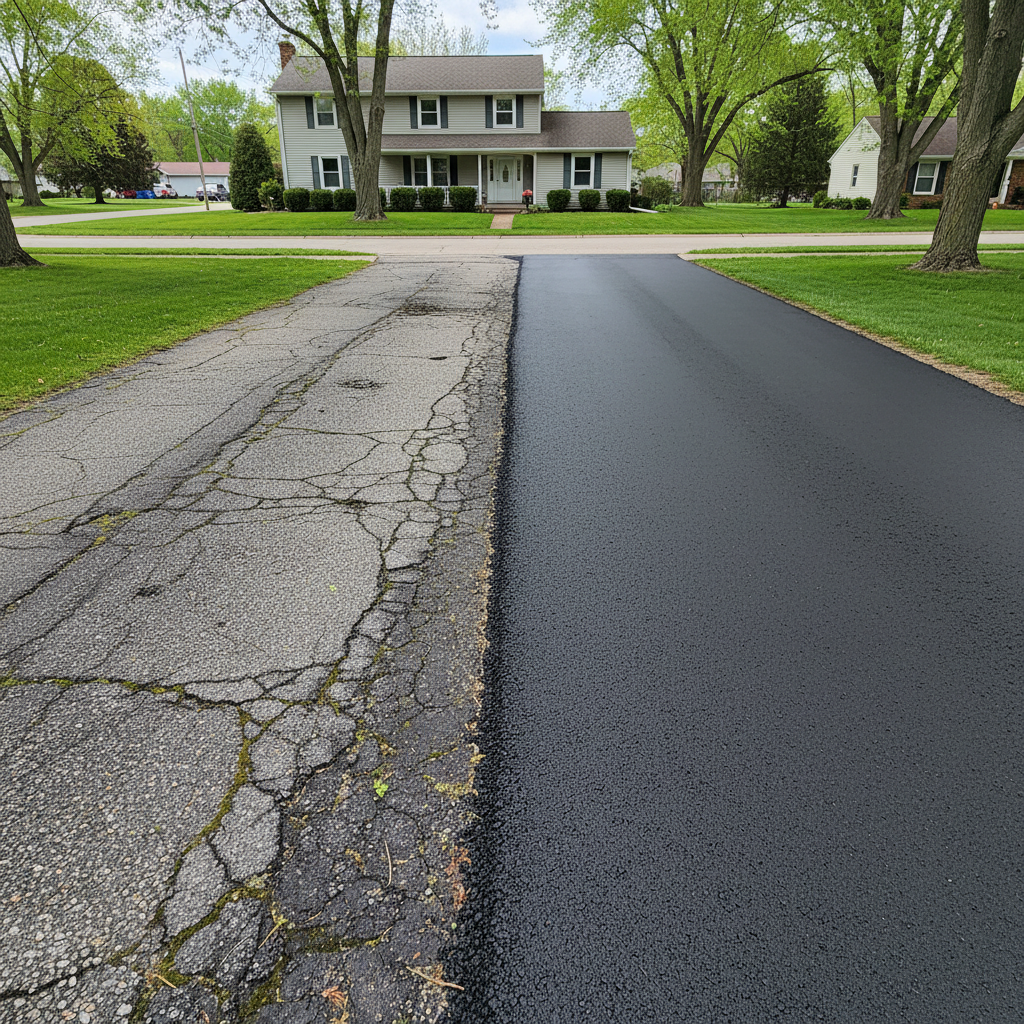
Your driveway's seen better days, huh? Maybe it's got cracks, potholes, or just looks tired. When you're staring at that worn-out asphalt, you're usually looking at two main ways to fix it: an asphalt overlay or a full tear-out and replacement. I get a lot of calls from folks in neighborhoods like Westnedge Hill wondering which route makes the most sense. So, let's talk about it.
Asphalt Overlay: The Quick Fix (Sometimes)
An asphalt overlay, or resurfacing as some folks call it, is basically putting a new layer of asphalt right on top of your existing one. Think of it like a fresh coat of paint, but for your driveway. We'll clean the surface, fix any major potholes or cracks, and then lay down a new couple of inches of hot asphalt mix.
The Good Stuff About Overlays:
- Cost: This is usually the big one. An overlay is almost always cheaper than a full replacement. You're saving on the demolition costs, the hauling away of old material, and the labor involved in preparing a completely new base.
- Speed: It's a quicker job. Less demo means less time on site, so you get your driveway back faster.
- Less Disruption: No heavy equipment tearing up your yard for days. It's a smoother process overall, which is nice.
The Not-So-Good Stuff About Overlays:
- Foundation Matters: This is crucial. An overlay only works if the existing base layer of your driveway is still in good shape. If you've got significant structural cracks, major heaving, or widespread drainage issues, putting a new layer on top is just hiding the problem. Those cracks will eventually reflect through the new surface – we call it 'reflection cracking.'
- Lifespan: While it extends the life of your driveway, it won't last as long as a brand-new, properly installed full replacement. You're typically looking at 8-15 years, depending on traffic and maintenance.
- Drainage Concerns: Adding a new layer raises the height of your driveway. We always check this carefully, but sometimes it can create issues with garage thresholds, sidewalks, or existing drainage patterns if not planned right.
Full Replacement: Starting Fresh
A full replacement means we tear out every bit of your old driveway – all the asphalt, and often some of the underlying base material too. Then, we prepare a brand new sub-base, add a fresh aggregate base layer, and finally, lay down new asphalt in two lifts (layers) for maximum durability.
The Good Stuff About Full Replacement:
- Durability & Lifespan: This is where full replacement shines. With a properly constructed base and new asphalt, you're looking at a driveway that can last 20-30 years, sometimes even longer with good maintenance. You're building from the ground up, so it's a much stronger, more resilient surface.
- Fixes Underlying Problems: If you've got serious drainage issues, a failing base, or significant sub-grade problems (which we see sometimes in areas with clay soils around Kalamazoo), a full replacement is the only way to truly address them. We can regrade the area, add new drainage, and ensure a solid foundation.
- Appearance: A brand new driveway just looks better. You get a perfectly smooth, consistent surface without any ghosting from old cracks.
The Not-So-Good Stuff About Full Replacement:
- Cost: It's more expensive, plain and simple. The demolition, disposal, and extensive base work all add up.
- Time & Disruption: It takes longer, usually several days, and involves more heavy equipment. Your driveway will be out of commission for a bit longer.
- More Involved Process: There's more planning and execution involved. But when done right, it's worth it.
So, Which One's Right for Your Kalamazoo Driveway?
Here's my rule of thumb for homeowners in Kalamazoo:
- Consider an Overlay if: Your driveway has mostly surface cracks, minor potholes, and the overall structure feels solid. You don't see large areas of alligator cracking (lots of interconnected cracks that look like alligator skin), significant heaving, or standing water after a rain. Your base is stable, and you're looking for a cost-effective way to refresh its appearance and extend its life for another decade or so.
- Go for a Full Replacement if: Your driveway is really falling apart. You've got widespread alligator cracking, major potholes that keep coming back, large sections that have sunk or heaved, or water consistently pools in certain areas. If you're planning to stay in your home for a long time and want the most durable, long-lasting solution, a full replacement is the way to go. It's an investment, but it pays off in peace of mind and curb appeal.
Honestly, the best way to figure it out is to have someone who knows asphalt take a look. We'll come out, inspect your driveway's condition, and give you an honest opinion on whether an overlay is viable or if you really need to bite the bullet and go for a full replacement. We've seen it all here at Fortune Asphalt Kalamazoo, from the old driveways in the Stuart neighborhood to newer homes in Oshtemo, and we can help you make the right call for your property and your budget.